
Chef Kwon Oh-jun, an Edomae Sushi Master
The word sushi (鮨) carries the idea of time — of aging, of stillness. Built upon techniques learned in Tokyo and the fish of Korea’s coastlines, TAKUMIGON is the quiet trace of one craftsman’s thirty-year practice left on the table.
What is Edomae aged sushi?
Edomae aged sushi is a Tokyo tradition that designs flavor through time rather than freshness alone. Fish is cured with salt and vinegar and rested at low temperature for days to weeks, deepening umami before it meets warm shari. At TAKUMIGON, each cut is aged to its own peak and served one piece at a time.
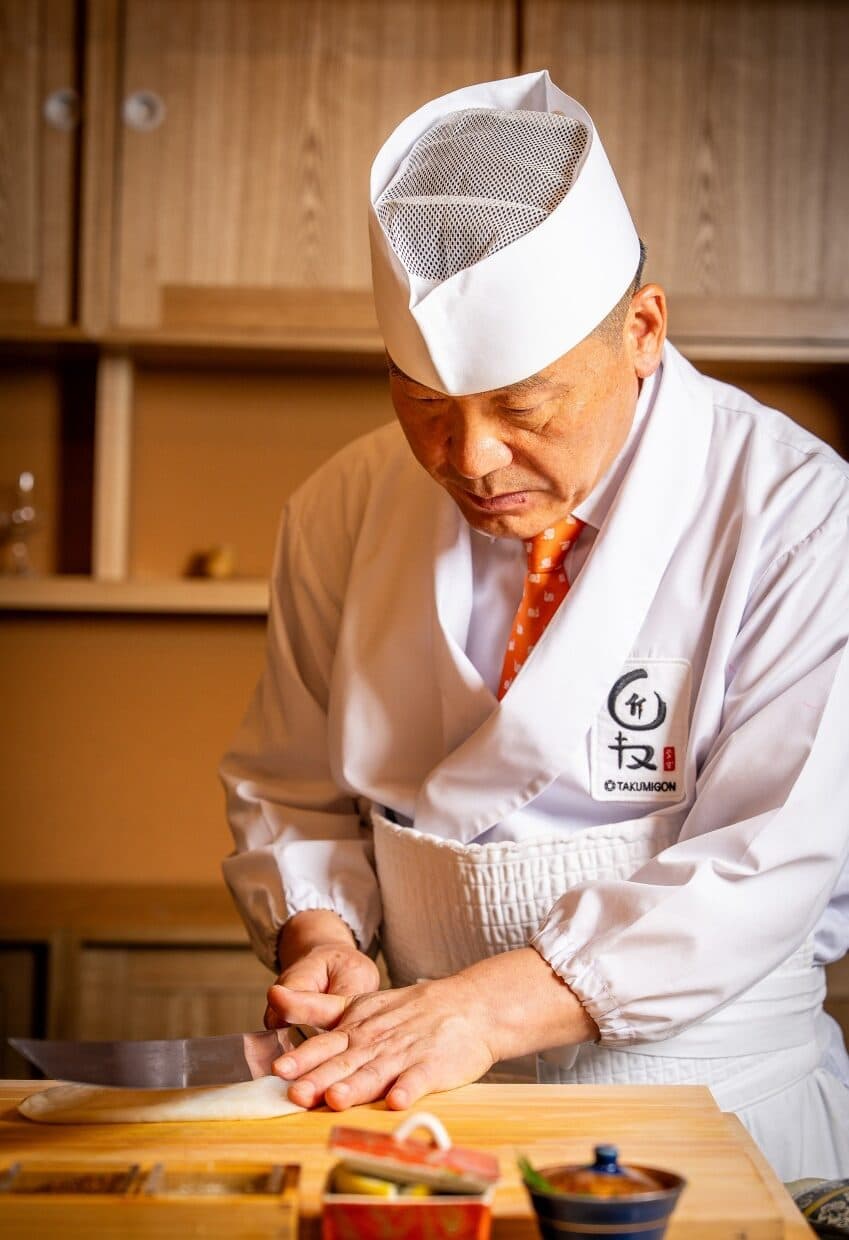
“Aging — the flavor time builds.”
Chef Kwon Oh-jun began his Edomae journey in Tokyo in 1994. He trained at the 110-year-old Sushihatsu, graduated from Tokyo Culinary School, and later studied the art of long-aged sushi at the Michelin two-star Sushishō Saitō. His life’s work has been to restore pre-modern Edomae techniques and reinterpret them through Korea’s seasons and coasts.
In 2021, the Embassy of Japan in Korea appointed him as the first Korean ‘Japanese Cuisine Goodwill Ambassador’ — a formal recognition of his role in understanding and sharing Japanese cuisine on Korean soil. He now serves as an advisor to the Japanese Cuisine Research Society.
Career
The flavor time builds — Edomae aging, as practiced at TAKUMIGON
Edomae (江戸前) sushi is not simply about freshness. It is a nineteenth-century Tokyo answer to a harder question: how to lift fish to the height of flavor without letting it turn. At TAKUMIGON, these classical aging methods are reinterpreted with Korea’s four seasons and coastal catch, and set on the counter one piece at a time.
Ice aging for inosinate
Sea bream, flounder, and sea bass are at their weakest the moment they are cut. We rest them under ice for one to three — sometimes five — days, letting ATP in the muscle convert into inosinate. Umami doubles, the grain softens, and only then does the neta meet warm shari.
Long, low-temperature aging
Akami is aged for a week; otoro and chutoro, ten days or more, so the fat can melt slowly on the tongue. Temperature, humidity, and how cleanly the blood is drawn set a different timeline for each cut — which is why one fish reaches the counter across several evenings, not in a single sitting.
Salt and vinegar cure
Kohada — the young gizzard shad — is the signature of Edomae. Drawn down with coarse salt, laid in rice vinegar for its acidity, then rested at least a day to settle. The silver shimmer of the skin, pressed against warm shari, is the most direct thread between a Tokyo counter of the 1800s and one in Cheongdam tonight.
Frequently Asked Questions
- What is Edomae aged sushi?
- Edomae sushi is a Tokyo tradition where fish is not simply served fresh but cured with salt and vinegar and aged at low temperature for days to weeks, drawing out umami (inosinate), then placed on warm vinegared rice. At TAKUMIGON this aging deepens the fish's natural flavor.
- Who is Chef Kwon Oh-jun?
- Chef Kwon Oh-jun is Korea's first Japanese Cuisine Goodwill Ambassador, appointed by the Embassy of Japan in Korea in 2021. He began training at the 110-year-old Sushihatsu in Tokyo, mastered long-aged sushi at the two-Michelin-star Sushishō Saitō, and has practiced Edomae sushi for three decades.
- How long is the fish aged?
- It depends on the cut and species. White fish is ice-aged one to five days, akami (lean tuna) about a week, and otoro or chutoro ten days or more. The aging period is adjusted according to the precision of the blood-draining.
